


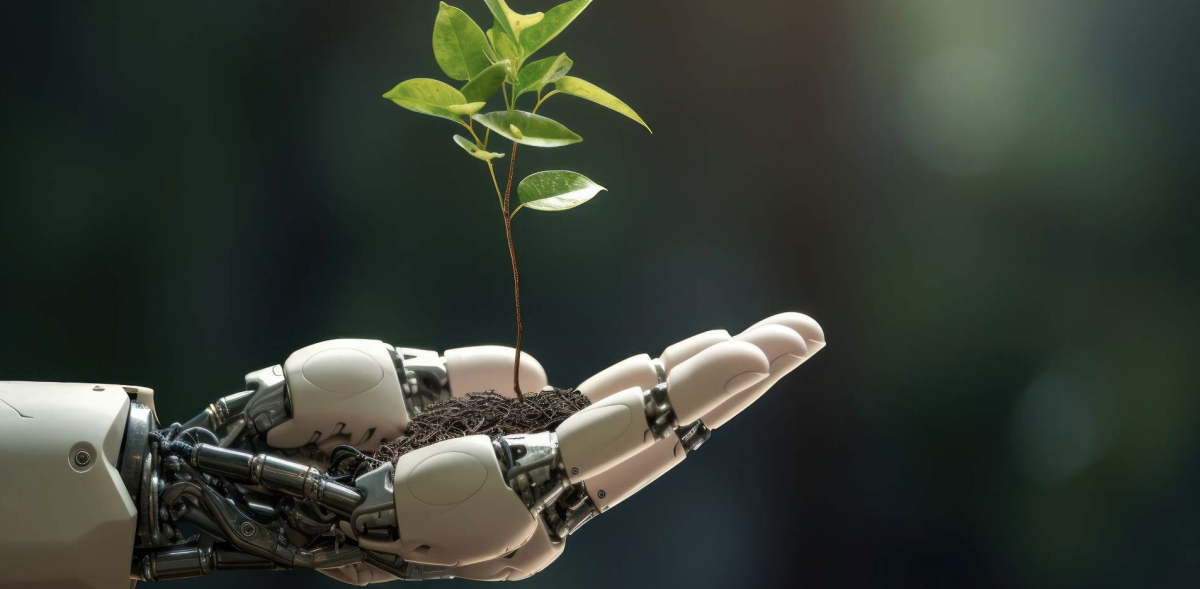
Do you ever think about what AI does to the world? Let alone the environment? We, students and teachers both, use AI whether it’s for a math question, summarizing text, or generating images. Even myself, but until recently I never questioned how AI is doing it. So how does AI impacts the environment?
💧 Water
AI has a huge impact on water usage. According to EESI (Environmental and Energy Study Institute), “A medium-sized data center can consume up to roughly 110 million gallons of water per year for cooling purposes, equivalent to the annual water usage of approximately 1,000 households”. A medium-sized data center itself can suck up so much water. Because of this, places in the US are facing water shortages. Similarly, Northern Virginia, where we’re located, is the main data center. We are not facing a general water shortage at the moment, but local counties/areas around us are. Data center alley, which is Loudoun County (Ashburn specifically), houses 133 data centers according to digitalrealty.com. That is a lot of data centers for Ashburn. But according to axios.com, there’s over 600+ data centers in Virginia overall.
⚡️ Energy
Secondly, AI gobbles up a considerable amount of energy. By energy, I mean electricity. For example, MIT News reported the power requirements of data centers in North America “increased from 2,688 megawatts at the end of 2022 to 5,341 megawatts at the end of 2023, partly driven by the demands of generative AI”. That is a lot of megawatts to go from in just a year. Moreover, a ChatGPT query “consumes about five times more electricity than a simple web search”. So, ChatGPT is hogging up a lot more energy than just one little web search itself. Why? Because ChatGPT is a big Generative AI tool that runs on so many data centers across the Earth.
🗑️ E-Waste
Thirdly, AI also contributes to this “E-Waste” issue. For context, E-Waste is short for electronic waste, which is waste consisting of discarded electronic products (such as computers, televisions, and cell phones) according to Merriam-Webster Dictionary. How does AI connect with this? Well, the MIT Technology Review predicts that “depending on the adoption rate of generative AI, the technology could add 1.2 million to 5 million metric tons of e-waste in total by 2030”. Furthermore, these discarded electronic products can harm our environment or our health if they are not disposed of properly. This is already an ongoing problem. Generative AI just makes it heavier. Moreover, one reason that “AI companies generate so much waste is how quickly hardware technology is advancing. Computing devices typically have lifespans of two to five years, and they’re replaced frequently with the most up-to-date versions”. And these computing devices most likely don’t get disposed of properly. That’s why AI is contributing such a ton to the E-Waste issue.
Should You Stop Using AI?
“Just because you can use AI, doesn’t mean you should: for many tasks, a non-AI method is still ‘good enough’. A good example is research — one of the most widely-used applications of AI. Many questions asked via ChatGPT can be answered just as well, or even better, through a search engine, a book, email or phone call. If your question requires particular types of sources, then AI might not be the best tool for the job, as it is poor at distinguishing between expertise and amateurs” according to Medium.com.
Now that you know some of how AI affects our environment, there’s many pathways that you could choose from. Some might keep on using AI, others might go fully against it. What matters is your choice.