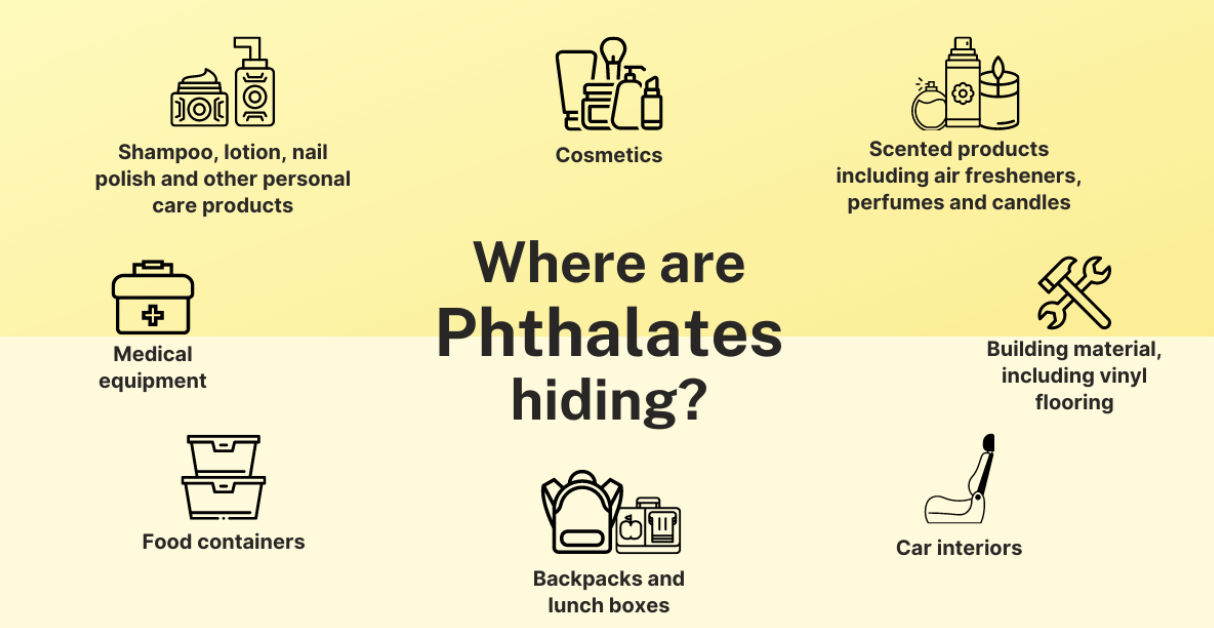


As the world industrializes and we grow more and more accustomed to modern comforts, new products and advancements will continue to come about. Unfortunately, these comforts do not come without a cost. For more specific information on these “everywhere chemicals,” visit ewg.org or nih.gov to learn about health risks, environmental concerns, and what you can do to help.
Phthalates: What are they?
Phthalates (pronounced tha-layts) are a type of man-made chemical compounds most commonly found in soft plastics. They can be absorbed through ingestion (such as if you heat up food in plastic containers), skin absorption, and inhalation. They are absorbed quickly and in most cases pass through the system with limited interaction; that is, for adults.
Who is at risk?
Young children and teens are at the greatest risk of being affected by these chemicals. The main problem they cause is developmental growth issues, so it poses a threat to young people who aren’t fully developed. They can cause obesity, respiratory problems, diabetes, and may impact the immune system. It’s important for younger individuals to avoid excessive exposure to phthalates to limit the risk on their development. Unfortunately, these chemicals are ever present in today’s world, but there are still steps you can take to prevent these issues.
How can I avoid them?
Think shower curtains, PVC tubing, toys, food packaging, and even some toothbrushes. All of those could contain phthalates. They also work as a solvent to extend the scent of fragrances, making their way into air fresheners, and hair sprays. They can even be found in some insect repellent. The easiest way to avoid them is to double check the products you use for an anti-phthalate certification, which can be found on some toothbrushes. For other items which may contain phthalates, using this chart can also help.